
The Act of Seeing with One's Own Eyes
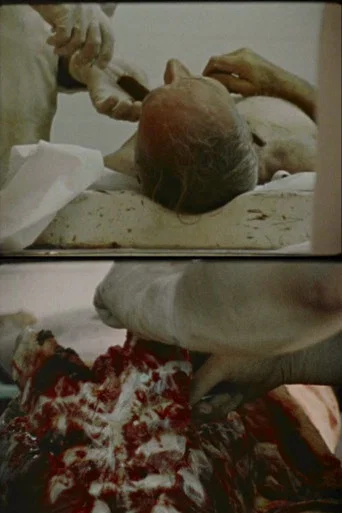
1972-02-19 · 32 minutes · Documentary
At a morgue, forensic pathologists conduct autopsies of the corpses assigned. "S. Brakhage, entering, WITH HIS CAMERA, one of the forbidden, terrific locations of our culture, the autopsy room. It is a place wherein, inversely, life is cherished, for it exists to affirm that no one of us may die without our knowing exactly why. All of us, in the person of the coroner, must see that, for ourselves, with our own eyes. It is a room full of appalling particular intimacies, the last ditch of individuation. Here our vague nightmare of mortality acquires the names and faces of OTHERS. This last is a process that requires a WITNESS; and what 'idea' may finally have inserted itself into the sensible world we can still scarcely guess, for the CAMERA would seem the perfect Eidetic Witness, staring with perfect compassion where we can scarcely bear to glance." – Hollis Frampton
Open playerThe player becomes available when the page loads. Availability, quality, audio and subtitles depend on the selected provider.
Before watching The Act of Seeing with One's Own Eyes
The Act of Seeing with One's Own Eyes is listed as Documentary. Use the story summary and cast to decide whether its subject and style match what you want to watch; catalog popularity and audience ratings describe different things.
Allow 32 minutes for the listed feature runtime.
The original language is English. This does not confirm that a particular player has dubbed audio or subtitles; check its own track menu.
Facts and synopsis: TMDB.
Streaming availability in India
No streaming offer for India was confirmed by the catalog check. Check the provider directly for the latest availability.
Streaming availability data supplied by JustWatch through TMDB. It does not verify third-party playback servers.
Related movies
 Borderlands
 Love in the Time of Corona
 Sebastian and Jonas Leaving the Party
 A Letter From The Fathers | Chapter II
 Daybreak Express
 Gingers
Choose by genre and original language
Compare stories, cast, release dates and runtimes before choosing a movie. Current popularity is different from audience ratings; use the collection that fits your question rather than treating either as a guarantee of quality.